
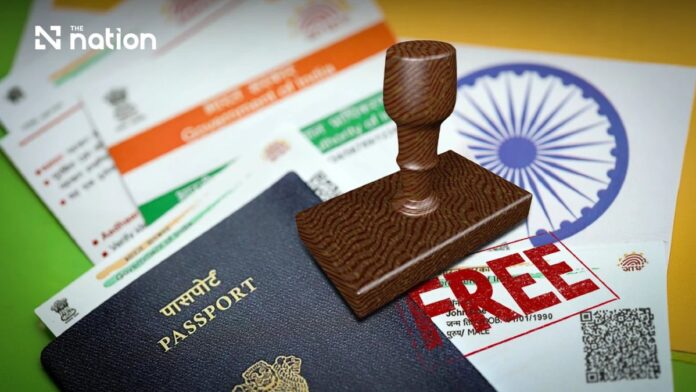
BANGKOK, Thailand – Indian citizens can now enter Thailand visa-free for up to 30 days. The government moved India into the regular visa exemption category after a temporary 60-day program ended.
The temporary 60-day program covered 93 countries and territories. The cabinet decided on July 14 not to put India back into the visa on arrival category.
India stays visa-free but only 30 days
Tourism businesses feared visa on arrival would add extra bureaucracy. They argued it would weaken Thailand’s competitive edge.
The government follows the rule of assigning only one entry category per country or territory. Indian travellers now get up to 30 days without a visa.
Thailand tightens entry controls
The new system combines tourism with economic interests and stricter screening. Overlapping categories are being scrapped.
Authorities want to stop people from misusing entry privileges. The average Indian stay is just over seven days, so 30 days is enough for holidays and longer trips.

Digital arrival card still mandatory
All foreign visitors must submit a Thailand Digital Arrival Card. Indian citizens are no exception.
The form can be filled out within three days before arrival, including the planned arrival day.
Thailand ranks third for Indian travellers
India’s most popular overseas destinations are the UAE and Saudi Arabia. Thailand comes third.
68.63 percent of Indian visitors travel independently. 59.68 percent are first-timers in Thailand.
Indian guests spend over 6,200 baht daily
Average spending is 6,203 baht per person per day. Per trip it’s around 36,354 baht.
Thai food tops the list of attractions, followed by beaches and spa and wellness offers. Many stay seven to 15 days, especially families and larger groups.
Vietnam and Malaysia raise the heat
Thailand faces competition from multiple destinations in the Indian market. Vietnam lures with low prices and incentives. Malaysia promotes visa-free entry.
Singapore has positioned itself strongly for family travel. Thailand aims for higher-value tourism, targeting families, wellness travellers, wedding groups and seniors.
Around 66,000 flight seats weekly
Direct flights from nine Indian cities connect to Bangkok, Krabi and Phuket. The Tourism Authority office in New Delhi handles 144 flights per week with more than 32,000 seats.
The Mumbai office reports about 160 flights and roughly 33,000 seats per week. Total capacity on Thailand-India routes stands at around 66,000 seats weekly.
New routes from smaller Indian cities
Some airlines suspended routes due to the Middle East conflict and higher fuel costs. The Tourism Authority expects capacity to rise again in peak season.
Indian airlines are expanding connections from smaller cities. Affected carriers are preparing to resume suspended flights. Targets include Lucknow, Chandigarh, Guwahati, Ahmedabad, Surat and Pune beyond Delhi, Kolkata and Mumbai.
Thailand promotes food, culture and wellness
Campaigns focus on experiences rather than classic sightseeing and photography. Food, culture, local life, wellness and community offers take centre stage.
Surat is seen as a market with wealthy clients because of its diamond industry. Pune offers access to higher-income travellers from its auto and industrial sectors. The strategy also covers Bhutan, Nepal and Bangladesh.
Younger travellers book via online portals
Solo travellers and friend groups often decide on a destination within a month after discovering deals on online travel agencies or social media. Budget-conscious premium travellers look for quality but don’t automatically pick the cheapest option.
Digital and AI-savvy travellers prefer cashless payments through India’s Unified Payments Interface. They increasingly use artificial intelligence for research and trip planning. Recommendations, word of mouth and social media posts also influence their choices.
Millennials and Generation Z make up about 90 percent of Indians travelling abroad, according to the authority. They are the strategic focus.
Weddings and medical tourism remain priorities
The Tourism Authority wants to boost wedding and celebration travel, especially during the Indian wedding season from November to March. Hotels, venues and flexible services have made Thailand a top choice for Indian weddings.
The campaign Healing is the New Luxury targets visitors seeking recovery, rehabilitation and wellness. MICE events – meetings, incentives, conferences and exhibitions – are also key because Thailand offers good value compared to major Indian cities.
Thailand provides a wide range of venues and facilities for team-building.
More offers for seniors and offbeat travel
The Tourism Authority also wants to grow the senior traveller market. India has more than 153 million seniors, some of whom come to Thailand for medical services, wellness programmes and longer stays.
Plans for 2027 include appearances at major tourism fairs like the South Asia Travel and Tourism Exchange and the Outbound Travel Mart. New routes will push visitors beyond Bangkok, Phuket and Pattaya.
YouTube, Instagram and WhatsApp top channels
India has around one billion internet users out of a population of roughly 1.4 billion. Thailand will continue reaching younger travellers through YouTube, Instagram and WhatsApp.
Campaigns on these platforms will promote Thai destinations and specific experiences.