
BANGKOK, THAILAND – Navigating Thailand’s immigration system has become increasingly digital, with new requirements for expatriates and visitors.
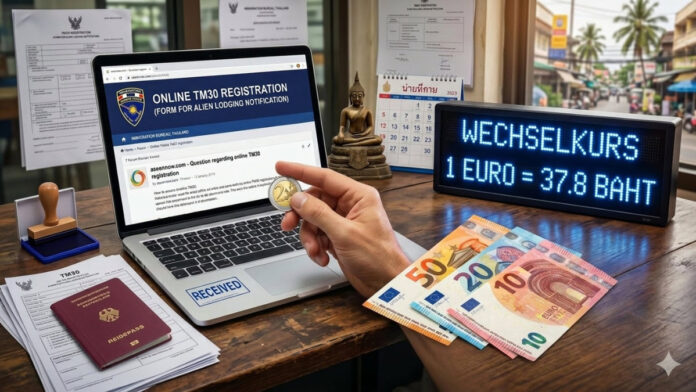
Foreigners moving to Thailand face a critical administrative requirement: their residential address must be reported to the immigration authorities within 24 hours of moving in. This process, known as the TM30, places the obligation on the landlord, but it is the tenant who ultimately feels the consequences of non-compliance, particularly during visa extensions.
This guide outlines pre-arrival necessities, the practicalities of the TM30 procedure, essential documents to retain, and key discussions with landlords. Understanding the process ensures a smooth experience with authorities.
First, the TDAC: Registration Begins Before Departure
Effective May 1, 2025, the Thailand Digital Arrival Card, or TDAC, replaces the older paper TM6 card. All non-Thai nationals entering by air, land, or sea must submit this form online before arrival, free of charge, via the official portal at tdac.immigration.go.th. The form requests passport details, arrival date, accommodation address, and some health-related questions.
The timeframe for completion is specific: no earlier than 72 hours before the planned arrival. Submitting the form too far in advance could lead to rejection. Immigration officers at border checkpoints will verify the entry directly in the system via a passport scan; a printed PDF is not mandatory but can be useful. Each individual, including infants, requires their own TDAC.
THIM: The Authority’s New Immigration App
In May 2026, the Thai Immigration Bureau began testing a new application called THIM – Thailand Immigration Management System. Developed in collaboration with Amazon Web Services and Digital Identity Co., it is available for free on iOS and Android. Users entering via THIM input their passport data once, and for subsequent visits, only update travel dates and return flights, with the rest of the information being saved.

The TDAC can be submitted directly within the app, while the separate web portal remains accessible. The official full launch is scheduled for October 1, 2026. From this date, THIM is intended to gradually become the central platform for all immigration matters, including 90-day reports, appointment bookings, and visa extensions. As of June 2026, the app is still in its pilot phase and may not be stable for all users. German is not yet supported; current languages include English, Russian, Japanese, and Chinese. Users interested in trying the app can find it in official stores under the name “THIM – Thai Immigration Bureau.”
What Section 38 of the Immigration Act Demands
The legal basis for address notification is Section 38 of the Immigration Act B.E. 2522 from 1979. This section mandates the owner or holder of a residence to report the arrival of a foreign guest to the responsible immigration office within 24 hours. The tenant is not the recipient of this duty, but the landlord is.
In practice, this does not diminish the tenant’s personal responsibility. While the fine falls on the landlord for a missed notification, it is the tenant who faces issues without a valid TM30 receipt at their next official appointment. Visa extensions, 90-day reports, and residence certificates all require complete TM30 documentation.
How the Landlord Submits the Notification
Registered hotels automatically transmit the notification upon check-in. Guests should explicitly request a receipt upon checkout. For private rentals, the process is different: the owner must register once on the official portal tm30.immigration.go.th or use the free app “Section 38,” available for iOS and Android. The initial registration requires the owner’s Thai identification number and the house book.
After account setup, the landlord enters the tenant’s passport details and arrival date. The system confirms the entry with a PDF receipt. This document is crucial for all future dealings with authorities and should be stored digitally and printed. Some owners grant tenants access to the portal, which is usually tolerated by authorities but does not alter the landlord’s legal responsibility.
The 24-Hour Deadline: What It Entails
The deadline begins at the moment of move-in, not the first business day thereafter. The online system accepts notifications around the clock, including weekends and public holidays. Someone moving in on a Friday evening must have the notification submitted by Saturday evening.
A late submission is flagged in the digital log and is immediately visible to officials. This obligation is not limited to the initial move-in. Every return from abroad, even a brief weekend trip, triggers a new reporting period, even if the address remains unchanged. Failure to realize this can lead to gaps in the notification record over years of residency, which can become apparent at immigration appointments.
Fines and Who Bears Them
The law stipulates fines ranging from 800 to 2,000 Baht for private landlords who fail to submit a TM30 notification. Hotel operators and accommodation providers face penalties of up to 10,000 Baht. These amounts translate to approximately 20 to 250 Euros, with exact conversions subject to fluctuating exchange rates.
There is no direct monetary penalty for the foreign tenant under Section 38. However, the indirect consequences can be more severe: if the TM30 receipt is missing for a visa extension or 90-day report appointment, many offices will refuse to process the request. Those unable to provide valid proof must first rectify the notification, which costs time and could, in extreme cases, jeopardize their residency status.
The Conversation with the Landlord: What to Clarify in Advance
The TM30 obligation should be addressed at the latest before signing the rental agreement. The central question is whether the landlord is registered on the online portal and who will handle the notification after each return from abroad. Many owners are aware of their duty but underestimate its repetitive nature. A cooperative landlord who is readily reachable makes a significant difference.
Those renting an apartment through a property management company should clarify if they handle TM30 notifications centrally. Large condo complexes in Bangkok, Chiang Mai, or Phuket often have established procedures for this. For smaller private rentals, initiative is required: a brief message after moving in, a photo of the receipt via WhatsApp, and the matter is settled. Landlords who cannot be reached despite efforts may allow tenants to submit the notification themselves with a written power of attorney, though acceptance depends on the specific immigration office.
What the TM30 Receipt is Precisely Used For
The TM30 receipt is not a mere filing document but an actively used work instrument. Nearly all immigration offices require the current receipt for annual residency permit renewals. For the 90-day report, the address on the receipt must match the reported address; discrepancies can lead to queries or rejection.
A current TM30 receipt is also a prerequisite for the Certificate of Residence, issued by immigration and needed for applications like a driver’s license or banking services. In Bangkok, processing takes about seven days. Those needing the document on short notice must ensure their TM30 is consistently up-to-date. Delays due to a missing receipt or address discrepancies can be avoided with foresight. For complex residency planning, specialized consultation services are recommended.
Technical Hurdles with the Online Portal
The portal tm30.immigration.go.th is generally accessible across browsers but has known weaknesses. Server outages and maintenance occur, and error messages are not always self-explanatory. Those experiencing issues uploading documents should compress files to under 1MB, as the system often silently rejects excessively large attachments. PDF format is more reliable than JPG.
The “Section 38” app often functions more stably than the web version for many users. It is available in English and guides users step-by-step through the input process. Upon successful submission, the app generates a confirmation PDF that should be saved immediately. Setting up the app on the landlord’s smartphone can save them a trip to the authorities, an argument that sometimes persuades reluctant owners.
Appearing Directly at the Authority: When It Is Necessary
Individuals unable to resolve technical issues with the portal or whose notification is not correctly logged in the system must appear in person at the relevant immigration office. For such visits, a complete document folder is recommended: passport, rental agreement, a copy of the landlord’s house book, and screenshots of any error messages. Appearing well-prepared demonstrates cooperation and can significantly speed up processing.
Confrontations at the counter are unhelpful. Officers implement what the system dictates. Those who can prove an error are generally offered a straightforward solution. Most problems arise not from malicious intent by authorities but from incomplete documentation or data entry that can be corrected with patience.
Keeping TM30 Documentation Clean Long-Term
Every TM30 receipt should be archived permanently, not just the most recent one. Authorities occasionally review older periods during renewal applications. A digital folder with all receipts, sorted by date, is usually sufficient. Printing receipts and keeping them with the passport makes one prepared for spontaneous checks.
Long-term residents with a permanent address should also verify after each overseas trip whether the new notification has been properly entered into the system. The landlord can provide confirmation via screenshot. Making this a routine avoids gaps that later require lengthy explanations at the counter.