
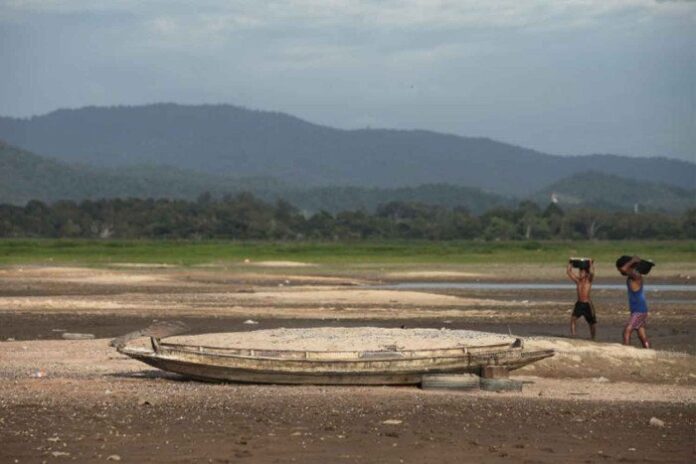
BANGKOK, Thailand – A Super El Niño threatens Thailand from October, with an 81% chance of a severe event that could become the strongest since 1950.
The Thai Meteorological Department warned rainfall could drop by at least ten percent. Harvests, rice plantations, and water supplies face direct danger.
81% chance of monster El Niño
Surapong Sarapa, director of the weather forecasting division, said forecasts from the US NOAA show an 81% probability of a very strong El Niño between October and December. It could be the strongest such event since 1950.
The Super El Niño is expected to weaken by early 2027, shifting into a mild El Niño. By the end of 2027, conditions are forecast to move toward a La Niña event.
Rainfall patterns shift dramatically
Total rainfall may not necessarily drop. The problem is geographic and temporal distribution. Longer dry periods reduce the number of rainy days, while precipitation concentrates in specific areas.
The consequences include heavy downpours in the dry season and more frequent so-called rain bombs. Reservoirs can barely capture these water masses because most rain is expected in border regions. Inland provinces face a massive drought as a result.

Climate change worsens the impact
Sarapa warned that a global temperature rise of around two degrees Celsius is intensifying the situation. Thailand must prepare for more severe changes in rainfall patterns than in previous events.
A changing rainfall pattern is a consequence of rising global temperatures. As a tropical country, we may not feel significantly hotter conditions, but we will face more severe changes in rainfall patterns.
said Surapong Sarapa, director of the weather forecasting division.
Past events serve as warning
Thailand experienced similar weather phenomena in 1997-98, 2015-16, and most recently 2024. The upcoming phase is classified by authorities as particularly critical.
Sarapa called for concrete plans to secure the country’s water reserves. Without countermeasures, pressure on agriculture and drinking water supply will increase significantly.
Water reserves run low
The four major dams supplying the central plain are expected to maintain their levels through August and September. However, the combined storage level is forecast to be about ten percent below last year’s level.
Thanes Somboon, spokesman for the Royal Irrigation Department and head of the Smart Water Operation Centre, confirmed the tense situation. He expects noticeable shortages once the drought period begins.
The water authority calculated allocations precisely: 9.49 billion cubic metres for consumption, agriculture, ecosystems, and industry. Another 5.46 billion cubic metres will be additionally released. The total planned water allocation for the rainy season reaches 14.956 billion cubic metres.
Water release to be cut next month
Somboon said authorities released more water this month to support farmers. Next month, however, releases will be significantly reduced to preserve supplies for the drought period, when water demand could rise by 20 percent.
We have released more water this month to support the farmers. Next month, however, we will reduce the releases to preserve supplies for the drought period, in which water demand could increase by 20 percent.
said Thanes Somboon, spokesman for the Royal Irrigation Department.
Rice harvest to shrink by 20%
A severe drought will hit the second rice harvest next year hardest. Water reserves will not be enough to adequately irrigate the fields. Somboon predicts a drop in rice production of about 20 percent.
The Ministry of Agriculture and Cooperatives is relying on an alternating wetting and drying system to save water in rice cultivation. Parcels within official irrigation zones will be spared because they continue to receive water from the dams.