
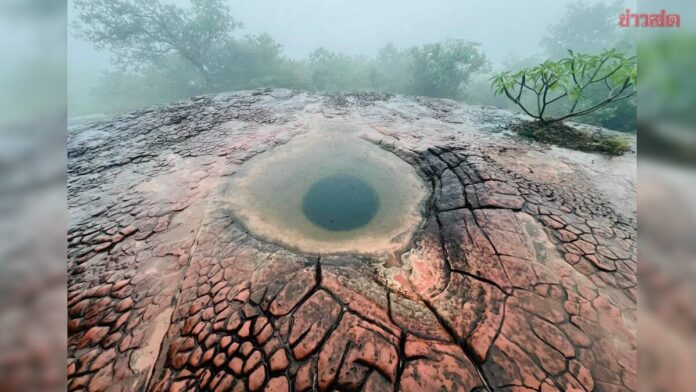
BUENG KAN, THAILAND – A natural rock formation shaped like the eye of a giant serpent god has been found in the Phu Langka National Park in Bueng Kan province. Clear spring water gathers in a hollow, drawing visitors and believers.
The Tham Naka cave lies in Bueng Khong Long district. Natural rock grooves and depressions combine to form a striking eye shape called the “eye of the serpent god.”
Rock grooves form the serpent god’s eye
The structure formed naturally without human intervention. The pattern resembles the pupil of a large mythical creature, making the cave a standout destination in the national park.
Clear natural spring water remains in the cave year-round. The water spot sits between the rocks and is called the holy basin.
Clear water collects in the rock
The water combines with the striking rock structure to create the special sight of the serpent god cave. Images of the site recently spread on social networks.
In Thai folk belief, the serpent god rules over waterways and wealth. Visitors climb to the rock formation, put their hands together in prayer, and ask for professional success and financial luck.
Belief in the serpent god draws visitors
The water forms the special sight of the cave of the serpent god together with the striking rock structure.

said a park official.
The site attracts both hikers and people seeking religious and spiritual destinations. The combination of natural formation and traditional belief makes the eye of the serpent god a special attraction in Bueng Kan.
Phu Langka becomes a destination for nature lovers
Anyone who wants to see the formation must hike to the serpent god cave in Phu Langka National Park. The spot combines a natural rock landscape with a motif clearly different from ordinary, man-made attractions.
The eye of the serpent god in Bueng Khong Long district is becoming known as a trip destination for travellers who want to explore Thailand’s northeast away from classic sights.