
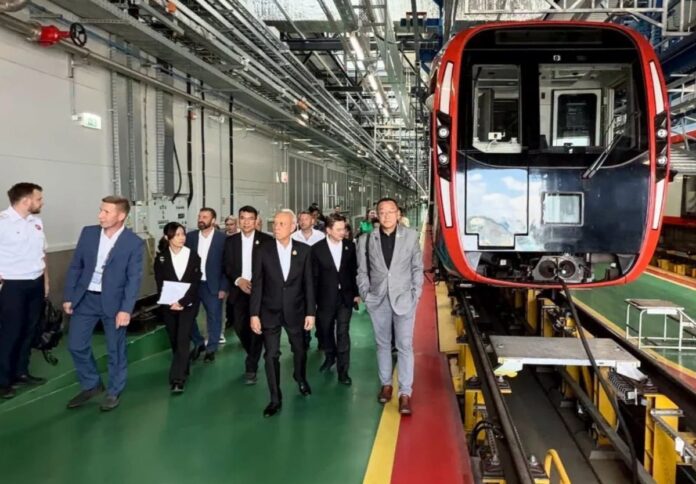
BANGKOK, THAILAND – Thailand’s Transport Ministry is studying whether Moscow metro operating and maintenance models can work on its own rail network. A delegation led by Deputy PM and Transport Minister Phiphat Ratchakitprakarn examined ticketing, passenger info and train upkeep.
The delegation visited Maryina Roshcha station and the Aminevskoye electric depot on August 5. Thai officials inspected daily operations and swapped technical know-how with Russian experts.
Focus on safety, reliability and costs
The talks centred on handling high passenger numbers, safety, reliability and metro operating costs. The visit followed the signing of a transport cooperation memorandum between Thailand and Russia.
93 percent of passengers pay without cash
The Moscow metro showed off several cashless payment options including bank cards, QR codes, digital devices and biometric face-recognition systems.
Around 93 percent of passengers use cashless payments, the metro said. Cash and staffed service counters remain available. Officials also saw ticket gates for multiple payment types, remote support to contact station staff, and a digital travel assistant.
QR codes to collect passenger feedback
Thai and Russian officials discussed QR codes the metro uses to gather passenger feedback. The feedback helps show whether new technology is actually needed before it is rolled out.

The delegation rode the metro and checked the displays inside trains. The screens show the current and next station, travel time, and possible transfer connections.
Metro trains run every 90 seconds in rush hour
The Moscow metro said trains can run at intervals of just 90 seconds during peak times. This is possible due to coordinated schedules, enough trains on standby, and regular maintenance, it said.
The tour was meant to show how the metro handles high passenger numbers while keeping a reliable service. Thailand’s Transport Ministry is now looking at which methods suit the country.
Maintenance aims to prevent failures before they happen
Anan Phonimdaeng, governor of the State Railway of Thailand, discussed regular checks and planned maintenance with Russian engineers. The goal is to prevent breakdowns and keep trains running.
The Moscow metro uses data on mileage and the performance of individual components. Parts are repaired or replaced before they fail. In one metro model, the manufacturer stays responsible for maintenance even after delivery.
Depot holds 28 trains ready for peak times
The Moscow metro operates almost 7,000 rail vehicles. The Aminevskoye depot supports 31 units, each with eight carriages.
During peak times 28 trains are in service while three more are inspected or maintained. Thailand wants to see if this approach improves reliability and makes total purchase and maintenance costs easier to predict over the trains’ lifespan.
More talks on tech and training planned
Thailand and Russia plan to continue talks on station technology, ticketing systems, maintenance and staff training. Thailand’s Transport Ministry is looking at adapting Moscow’s experience to the needs of the Thai rail network.