
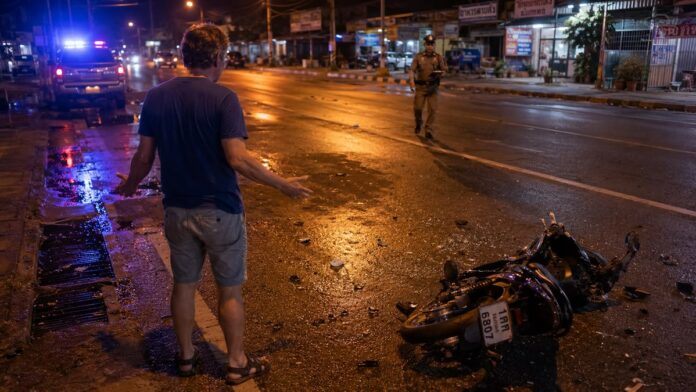
BANGKOK, THAILAND – A momentary lapse in attention, a misplaced glance, or an insufficient braking distance can tragically result in someone lying motionless on the road. In Thailand, being involved in a fatal traffic accident does not merely lead to a traffic insurance claim; it initiates criminal proceedings, with a process that deviates from what many international visitors expect.
Making the right decisions in the initial minutes and hours is paramount. A single misstep can escalate an accident into a decade-long judicial ordeal. Understanding the course of events, the legal framework, and the specific actions required for expatriates from Germany, Austria, and Switzerland can help maintain composure, even under extreme shock.
What Thai Criminal Law Means for Foreigners
According to Section 291 of the Thai Criminal Code, negligent homicide carries a penalty of up to ten years imprisonment and a fine of up to 20,000 Baht. This law applies equally to Thai citizens and foreigners; nationality, tourist visas, or ignorance of the law offer no protection.
The Thai legal system operates without juries, with a single judge rendering decisions. Few evidence objections are permitted, and cross-examinations are brief. While procedures move swiftly through the initial stages compared to Western countries, the overall resolution can still take months or years before a verdict becomes legally binding.
The First Minutes After an Accident
It is crucial to remain at the scene. Fleeing the scene constitutes a separate criminal offense, pursued regardless of culpability in the initial accident. Hit-and-run accusations can worsen an already difficult situation by implying intent where none existed.
Immediately contact the police at 191. Secure the accident scene as much as possible. Take photographs of the accident’s progression, vehicle positions, damages, and the surrounding area before any changes occur. The police report is the definitive document for all subsequent proceedings, including insurance claims, criminal investigations, and civil lawsuits.

Arrest: When it Happens and What it Means
In cases of fatal accidents, an immediate arrest at the scene is highly probable. Police have the authority to detain individuals for up to 48 hours without judicial review. During this period, you may be questioned. It is imperative not to speak without legal counsel, even with the intention to appear cooperative, as any statement can be used against you.
After 48 hours, the police must either release you or present you before a judge. The judge will then decide on further pre-trial detention, initially in 12-day increments, potentially extending up to 84 days before prosecutors must file charges. This investigative phase can span over three months before the main trial commences.
Bail for Foreigners: Possible, but Costlier
Bail is generally available, including for foreigners. However, courts often set significantly higher bail amounts for non-Thai nationals due to a perceived flight risk. Individuals without demonstrable ties to Thailand, such as long-term visas, family, or a permanent address, face greater challenges.
In practice, securing bail for foreigners almost always requires a Thai co-signer or, at minimum, a lawyer to manage the process. A bail hearing typically occurs within 48 hours. Without prepared documentation, including a Thai address, proof of social connections, and financial statements, you risk rejection. All documents must be in Thai; English summaries hold no legal weight.
The Exit Ban: When Thailand Becomes a Trap
In severe accidents resulting in fatalities, authorities frequently impose an exit ban. This means your passport is held by the court, immigration is notified, and you are prohibited from leaving Thailand until the legal proceedings are concluded. This can take many months, or even over a year.
For expatriates, this can disrupt medical appointments abroad, prevent them from attending to family matters, and necessitate visa extensions, all under the cloud of an ongoing legal case. Attempting to depart clandestinely is ill-advised; immigration and judicial authorities are interconnected, and such an attempt could be construed as an act of flight.
Criminal and Civil Proceedings Run in Parallel
A factor that is often overlooked is that civil proceedings in Thailand are independent of criminal proceedings. The family of the deceased can, and in serious cases typically will, seek compensation for damages. These claims are added to the criminal sentence and generally far exceed the coverage of standard insurance policies.
Civil claims in fatal cases often amount to several million Baht. In one documented instance in Bangkok, a doctor’s family demanded 72 million Baht in compensation after their daughter’s death. While such sums are rare, they illustrate the potential financial scale. A settlement with the family, known as Kha Tham Khwan and deeply rooted in cultural practices, plays a significant practical role in Thailand; a swift out-of-court agreement can substantially mitigate the criminal sentence or lead to the withdrawal of the lawsuit.
Settlement with the Family: What it Offers and Costs
Out-of-court settlements with surviving families are a firmly integrated aspect of Thai legal practice. Prompt and generous compensation from the accused—covering funeral expenses, loss of income, and moral damages—demonstrates remorse and responsibility, factors Thai courts consider. This can be the decisive factor between a suspended sentence and actual imprisonment.
Negotiating such a settlement should never be done without legal representation. The settlement amount is not fixed, the process is culturally complex, and a premature or poorly formulated payment could be misinterpreted in court. Individuals who do not speak Thai and are unfamiliar with cultural nuances absolutely require an experienced local lawyer, not merely an acquaintance who speaks the language. Specialized legal counsel is critical at this stage.
What the Embassy Can and Cannot Do
Contact your embassy as soon as possible. The German Embassy in Bangkok, the Austrian Honorary Consulate, or the Swiss Consulate can provide consular assistance, including visits to those in pre-trial detention, referrals to lawyers, and family notification. This support is real and available around the clock for urgent matters.
However, embassies cannot intervene in legal proceedings, prevent arrests, pay bail, or exert diplomatic pressure to influence the outcome. Thai courts adjudicate according to Thai law. Consular protection is not an immunity from prosecution but a safety net ensuring fair treatment and support through a foreign legal system.
Insurance: When It Pays and When It Doesn’t
The mandatory Thai third-party insurance, Por Ror Bor, covers victims and their families with a basic amount. In cases of death, it pays a sum to the family. It does not cover your own expenses, legal defense, or civil claims exceeding the basic sum. Driving without a valid license also forfeits any claim to voluntary insurance benefits.
Operating a rental vehicle without an international driver’s license or the proper Thai-valid documentation not only increases criminal risk but also means you could be liable for all costs. In Phuket alone, a targeted campaign in 2025 led to the arrest of over 20,000 foreigners driving without a valid license. Vehicle inspections are intensifying. Comprehensive insurance coverage, including third-party liability, is not optional but a necessity in Thailand.
When It Wasn’t a Driving Accident: Offenses Without Intent
Not all offenses in Thailand occur on the road. Assault following a brawl, property damage after an argument, or an ill-timed joke can constitute criminal offenses under Thai law, even if considered minor infractions elsewhere. This is particularly true for matters related to the Computer Crime Act, lèse-majesté, or drug consumption.
The critical point is that ignorance of the law is not a defense. Thai courts do not make exceptions for foreigners unaware of the law. Anyone residing in or traveling through Thailand is fully subject to Thai law from day one. Those who have informed themselves about their rights and obligations are better positioned in any difficult situation than individuals who hope for the best.
What to Do Now
Save these numbers now, not after an accident: Police 191, Embassy Bangkok (Germany: +66 2 182 9000, Austria: +66 2 305 4000, Switzerland: +66 2 674 6900), and at least one law firm with experience in criminal law in Thailand. Searching for these numbers during an emergency wastes precious time.
Furthermore, carefully review any police report before signing it. Do not sign documents in Thai that you do not understand. Bring a Thai-speaking person to the police station. Anyone facing a serious legal situation in Thailand requires local expertise, not just good intentions. An experienced legal and visa advisor on the ground understands the procedures and can make a decisive difference in the critical initial hours.