
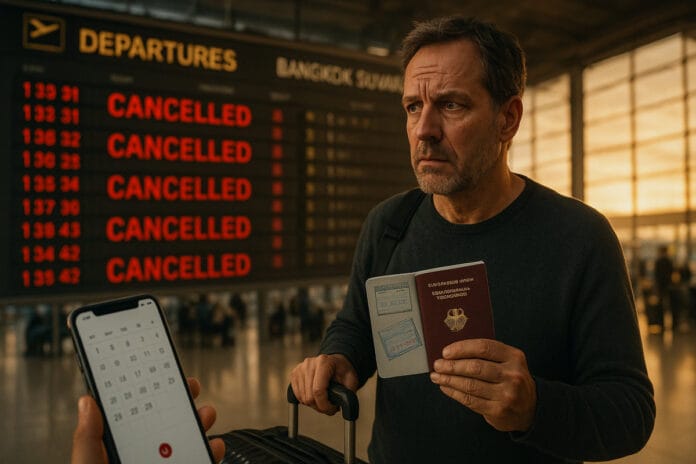
The suitcase is packed, the taxi to the airport is on its way, and your passport bears the stamp of your last legal day in Thailand. For countless travelers, this is a familiar routine — until the unexpected strikes: a canceled flight on the final day of your permitted stay. What happens next can carry serious consequences.
The Legal Framework
Thailand’s immigration rules are precise. The stamped final date in your passport is binding. Anyone staying beyond it is officially an overstayer under the Immigration Act of 1979. In practice, however, a gray zone exists between law and leniency — one travelers would be wise to understand.
Many visitors misunderstand the key difference between visa validity and the permitted duration of stay. A visa authorizes entry within a certain period; your exact departure deadline is determined only by the entry stamp given upon arrival. For German, Austrian, and Swiss travelers, current policy allows a visa-free stay of up to 60 days by air under 2024 revisions. Entry by land is also possible, though restrictions apply to the number of such visits per year.
The Critical Moment at the Airport
A missed flight on the last valid day of your stay — whether due to weather, technical issues, or airline delays — can quickly become a legal tangle. The Immigration Bureau will not initially weigh the reason for your delay: the law sets fines of 500 baht per day of overstaying, up to a maximum of 20,000 baht (roughly 40 days).
Still, officers often show understanding in genuine cases of delay. Verified flight cancellations or short overstays are sometimes excused, particularly if travelers communicate respectfully and provide evidence. Courtesy and calm explanation can go a long way in Thailand.
What to Do When You’re Stuck
If your flight is canceled on the day your visa expires, act fast. The most direct option is to rebook on the same day. Major Thai airports operate multiple daily flights to key destinations.

If that’s not possible, head immediately to the nearest immigration office to request a seven-day extension. Offices are typically open 8:30 a.m. to 4:30 p.m., though ticket issuance usually stops around 3 p.m. The extension fee is 1,900 baht and requires passport photos, copies of key passport pages, and a completed form.
The Consequences of Overstaying
Penalties depend on duration and intent. Voluntary departure after fewer than 90 days of overstay usually leads only to a fine and a passport stamp marking the violation. This can result in additional scrutiny on future Thai entries but not an automatic ban.
Stays of more than 90 days without authorization trigger bans ranging from one to ten years, escalating with the length of the overstay.
If caught by police rather than reporting voluntarily, the outcome is harsher. Offenders risk detention in Bangkok’s Immigration Detention Center, known for overcrowded conditions far below Western standards. Overstayers arrested after less than a year face a five-year ban; over one year leads to a ten-year ban, a policy in effect since 2016.
Avoiding the Trap
The best prevention is planning. Seasoned travelers schedule departures one or two days before their visa expires, leaving a buffer for flight delays, traffic jams, or illness. The cost of an extra night is trivial compared to potential penalties.
If leaving on your final day, have all documents ready — passport, boarding pass, hotel bookings, and cash. Overstay fines must be paid in cash, and not all immigration counters accept credit cards. Always carry up to 20,000 baht to cover any contingencies.
The Role of Airlines
While airlines may share moral responsibility when cancellations cause overstays, legal liability rests with the traveler. Thailand imposes no obligation on airlines to pay fines. Some carriers, however, issue confirmation letters acknowledging flight cancellations, which can help waive or reduce penalties.
Always inform airline staff immediately if you risk overstaying. Ask for priority rebooking or a written statement verifying the delay. Keep a record of all communications — they may prove vital later.
Airports vs. Land Borders
Overstay processing differs by exit point. International airports have dedicated counters for fines located post-security but before passport control. Payment usually takes from a few minutes to half an hour.
At land borders, the process can be more complex. Some crossings lack facilities to handle overstays, forcing travelers to report to an immigration office in a larger city — delaying departure and adding expense. In such cases, leaving from an international airport is generally safer.
Nationalities and Exceptions
Visa-free durations in Thailand vary by nationality. Most European citizens, as well as those from North America and Australia, currently receive 60 days on arrival. Visitors from countries such as Brazil, Chile, and South Korea enjoy 90 days.
Malaysian citizens may enter visa-free indefinitely — a unique arrangement rooted in historical ties — but they too face penalties if they exceed their stamped stay.
Long-Term Implications
An overstay mark doesn’t just affect travel to Thailand. Many countries, including the U.S., Canada, Australia, and the U.K., ask visa applicants to declare prior immigration violations. A recorded overstay can complicate approval elsewhere.
Even after a Thai entry ban expires, prior violators may undergo extra scrutiny when reapplying for visas. Authorities keep digital records of all infractions. Demonstrating genuine travel intent and compliance with future rules becomes crucial.
Policy Evolution
Thailand’s immigration policy has undergone several reforms in recent years, aiming to balance tourism promotion with enforcement. The government seeks to welcome visitors while discouraging long-term, visa-free stays that effectively become illegal residency.
Real-World Accounts
Online traveler forums are filled with overstay stories — from sympathetic encounters with understanding officers to bureaucratic ordeals lasting hours. A common thread: politeness matters. Respectful, patient interactions often yield better outcomes than confrontation. Cultural awareness — especially around “saving face” — can be your best ally.
Embassy Assistance
German, Austrian, and Swiss nationals can contact their embassies in emergencies, though diplomatic help is limited. Embassies cannot override Thai law or pay fines but can offer guidance, provide lawyer contacts, and support detained citizens. Some may issue small emergency loans under strict conditions.
Embassies strongly advise compliance with immigration law and early communication if problems arise.
Other Scenarios
Unintended overstays may result from medical emergencies, accidents, or stolen passports. In such cases, notify authorities immediately and document all events. Medical certificates or police reports can support leniency requests.
If your passport is lost, file a police report, then visit your embassy for an emergency travel document — a process that can take several days. Contact immigration early to explain the situation.
Financial Preparedness
Beyond fines, overstays can incur hotel, rebooking, and legal costs. Travelers should budget reserves to handle delays without financial strain. Access to funds can also be unpredictable — ATMs charge fees and may cap withdrawals. Multiple payment options are advisable.
The Bottom Line
Leaving Thailand on your last valid day is a gamble. While authorities often show understanding toward unintentional delays, responsibility lies squarely with the traveler.
Allow time, plan ahead, and respect the rules. A one-night buffer can save you fines, stress, and years of travel complications.
Thailand remains welcoming to visitors who follow its laws — and a little foresight goes a long way toward keeping your journey trouble-free.
Editor’s Note:
This article is based on Thai immigration regulations and traveler reports as of October 2025. Policies may change; always consult official Thai Immigration Bureau channels or local embassies for the latest updates. This article is for informational purposes only and does not constitute legal advice.