

Dangerous beauties on the shore
The Department of Marine and Coastal Resources (DMCR) raised the alarm after 80–90 Bluebottles (Physalia sp.) were spotted along Patok Bay on Racha Island. These tentacle-laden creatures, with 3–7cm translucent bells, are mesmerising to watch but extremely hazardous to humans.
Similar sightings have been reported at other popular tourist beaches, including Kamala Beach and Sirinat National Park. The invasion is linked to strong southwest monsoon winds, which push the jellyfish toward the coast.
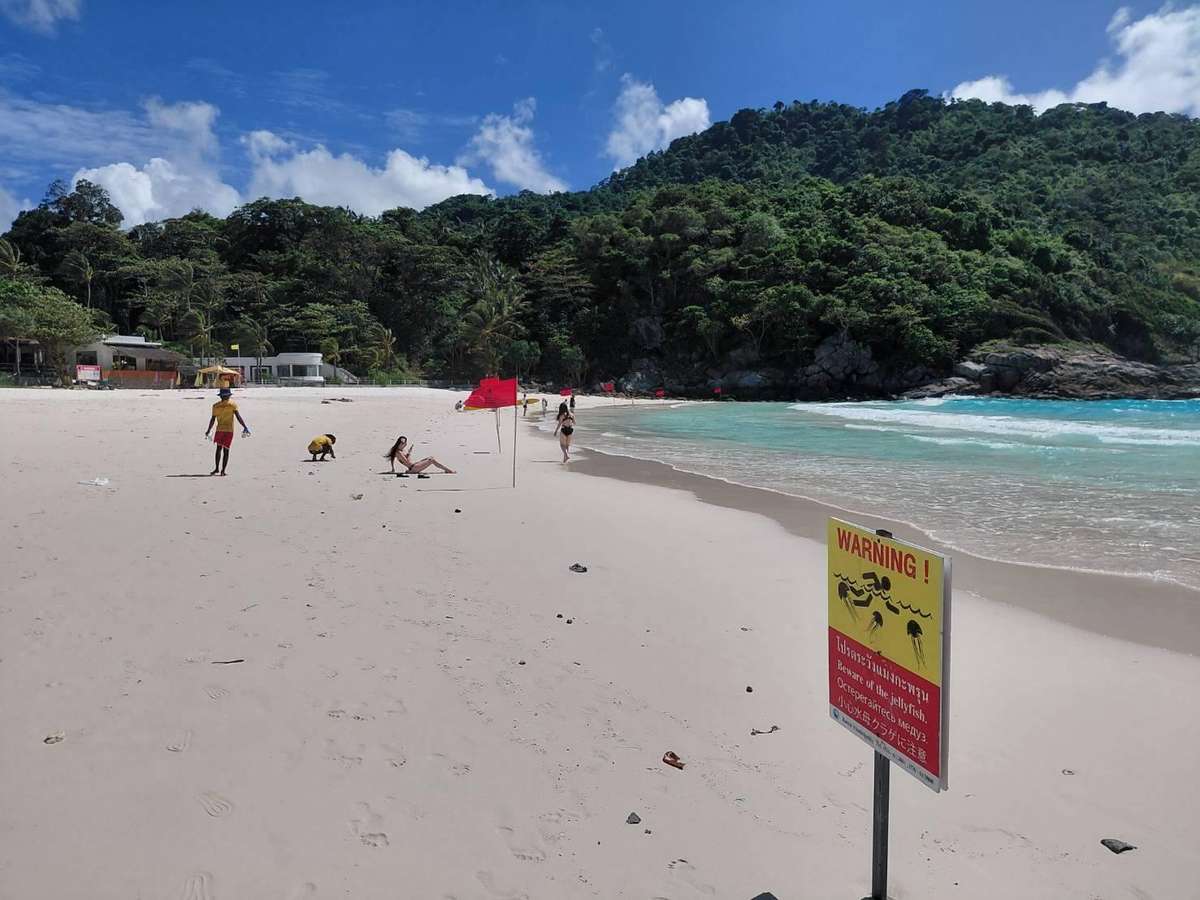
Immediate action by authorities
Officials acted swiftly: red warning flags were hoisted and strict swimming bans enforced in all affected areas. Lifeguard chief Marokas Chandee on Racha Yai Island coordinated the safety measures.
“Fortunately, no injuries have been reported so far,” said the DMCR. Nevertheless, all lifeguards and beach patrols remain on high alert. Monitoring has been intensified to detect further jellyfish clusters early.
What to do if stung
The Portuguese man-of-war, also called the Bluebottle, is feared for its painful stings. Contact with its tentacles can cause burning pain, skin irritation, and in severe cases, breathing difficulties.
Authorities advise immediate action: rinse the affected area with vinegar for at least 30 seconds, then seek medical attention immediately. Never use freshwater or alcohol, as this can worsen venom release.
Monsoon season brings natural hazards alongside refreshing swims, with winds and currents regularly pushing jellyfish toward beaches. Swimming bans remain until the waters are clear. DMCR continues to monitor the situation and will lift restrictions once the threat has passed.
For tourists, this means no dips in the turquoise waters – but a rare opportunity to observe these remarkable sea creatures safely. The Portuguese man-of-war is dangerous, but also a striking reminder of the ocean’s diversity.