
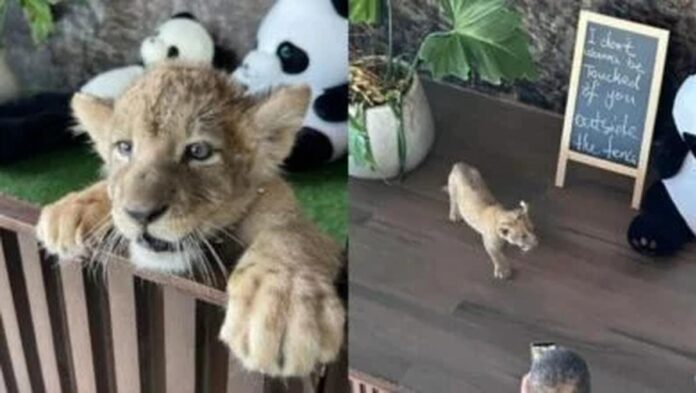
PHUKET, Thailand – A Chinese tourist has been bitten on the arm by a lion cub at a cafe. Staff said no rabies shot was needed, so he paid for it himself.
The incident has sparked a new debate in China about the safety of animal cafes. The tourist posted about the attack on Chinese social media.
Lion cub broke the skin
The tourist described in Chinese social media that the animal bit down during a paid encounter and injured the skin. Staff treated the wound with iodine and said the cafe’s lions were vaccinated.
On August 10, Chinese outlet Xiaoxiang Morning Herald spoke directly with the victim. The person said they remained worried despite the assurance and paid for the rabies vaccine themselves.
Fever after the jab is a possible side effect
Since the vaccination, the tourist said he has had no serious health problems. He did get fever and pain in his arm, however.
Fever and a sore injection site are common side effects of the rabies vaccine. They do not mean the treatment has failed.

Chinese users warn of the risk
The report spread quickly on Chinese platforms such as Sina, NetEase, Tencent News and Sohu. Many users advised travellers not to take such a risk.
In one widely shared comment, it was said that even a lion cub remains a wild animal. While playing or teething it can injure people.
Anyone who is bitten or scratched should wash the area immediately and, regardless of what the staff say, go to a hospital.
said an anonymous social media user.
Thailand’s health advice applies even to vaccinated animals
Thai health guidelines classify any bite or scratch that breaks the skin as a possible rabies exposure. The wound should be washed with soap and running water.
After that, vaccination should happen as quickly as possible. This applies even if the owner says the animal is vaccinated.
Rabies is almost always fatal after symptoms appear
The risk of infection is low, but the consequences can be severe. Once symptoms appear, rabies is almost always fatal; at that point there is no treatment.
Thailand records rabies deaths in most years. In May, a man in Ubon Ratchathani died after being scratched by a puppy.
Animal cafes remain under scrutiny
Lion cafes have spread in recent years in Phuket, Chiang Mai and Bangkok. Visitors can sit close to cubs and take photos for a few hundred to several thousand baht.
Under Thailand’s Wildlife Protection and Conservation Act, lions are classified as controlled wild animals. Keepers need a permit, and the animals must stay at the registered address.
Previous cases are not linked to this bite
Control of such establishments has not been watertight in the past. In February 2024, officials seized a cub named Nong Kiwi because it was not registered and was kept in conditions that did not meet the requirements.
In January 2025, police raided a cafe in Ratsada on Phuket where lion cubs were used for paid photos. Two Chinese nationals were arrested for working on tourist visas without work permits. Both cases are not linked to the current incident.
Cafe remains unnamed
No Chinese report named the cafe. Thaiger was also unable to identify the establishment.
Operators say their standards are sufficient. The Department of National Parks said it inspects registered businesses and monitors them regularly.