
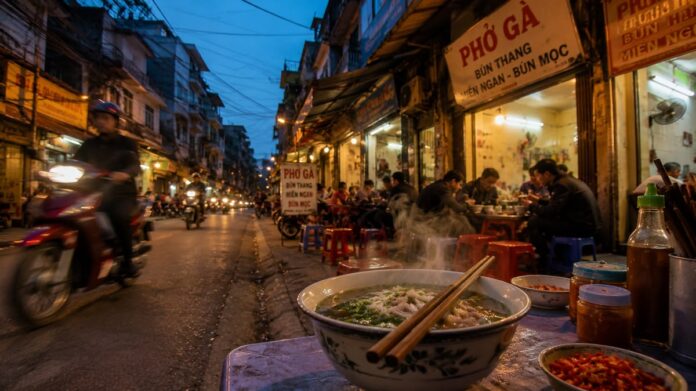
HANOI, VIETNAM – Expats are increasingly comparing Vietnam and Thailand as potential new homes, with many blogs and forums suggesting Vietnam offers a better deal.
Numerous expat blogs, travel influencers, and forums are currently touting Vietnam as the new Thailand, assuring each other they have found a better deal. Vietnam is claimed to outperform Thailand in almost every category, being cheaper, more authentic, and healthier. Those living in Thailand are familiar with this discourse and rightly wonder if these claims hold true.
This comparison is worthwhile, but it requires precision. This article aims to show what actually makes Vietnam cheaper, where it excels, and where the hype falls short of reality. It offers numbers and facts for individuals who want to know if they are missing out, rather than travel brochure prose.
What Actually Makes Vietnam Cheaper
According to current calculations for 2026, Vietnam is estimated to be around 20 to 35 percent cheaper than Thailand for a comparable lifestyle. An expat residing in Thao Dien, an expat district in Ho Chi Minh City, might pay between $800 and $1,500 per month for a two-bedroom apartment. In contrast, Thonglor or Ekkamai in Bangkok can cost between $1,200 and $2,000.
In Da Nang, a single household with a comfortable lifestyle can expect a monthly budget of $600 to $1,000. For a couple living well in Ho Chi Minh City – with their own apartment, dining out, and occasional travel – a realistic budget is between $1,800 and $2,500. Bangkok would require $2,000 to $3,000 for the same scenario.
The difference in food costs is less dramatic than often claimed. A Pho or Banh Mi from a reputable street food vendor costs $2 to $3, comparable to a meal in Bangkok priced at $2 to $4. Western restaurant dining in both countries falls into a similar price range of $7 to $15 per person. Therefore, the difference lies less in individual spectacular prices and more in the cumulative total of expenses at the end of the month.

Vietnamese Cuisine: World-Class at Street Prices
Pho bo, Bun Bo Hue, Banh Mi, Goi Cuon – these are not tourist dishes but everyday meals prepared fresh on every corner. Vietnamese cuisine is globally recognized as one of the healthiest, featuring low fat, abundant fresh vegetables, herbs, and light broths. Those who opt for Western food and Bangkok’s restaurant scene in Thailand spend significantly more and do not necessarily eat healthier. This is not a cliché but a tangible daily reality.
Coffee indeed has cult status in Vietnam. Ca Phe Trung, the egg coffee from Hanoi prepared with whipped egg yolk, or the strong, sweet Ca Phe Sua Da served over ice, are not trendy drinks but integral parts of daily culture. A cup costs 50 to 80 cents. In comparison, obtaining a morning coffee from a chain in Thailand can cost ten times as much.
Visas: Where Thailand Has a Clear Advantage
German and Swiss citizens currently enjoy visa-free entry to Vietnam for 45 days. Austrians require an e-visa, valid for 90 days, which can be applied for online – it is straightforward but not free. For longer stays, a long-term visa is necessary, such as a business, work, or investor visa. A retirement visa, akin to Thailand’s Non-OA with clear requirements and annual renewal options, does not exist in Vietnam.
Those wishing to stay permanently as retirees in Vietnam navigate a gray area of rolling e-visa stays and occasional border runs. Thailand offers structured long-term options like the Non-OA, the Non-O for retirees, and the Thailand Elite Card, all of which are legally sound and predictable. Vietnam has been discussing a ‘golden visa’ for investors for years, but details remained vague until mid-2026. For those who rely on stability and do not want to engage in constant visa arithmetic, Thailand is the better option. This is a crucial point for anyone aiming to build a permanent life in Southeast Asia.
Healthcare: Thailand Remains the Benchmark
In recent years, Vietnam has significantly invested in its hospital infrastructure. Ho Chi Minh City and Hanoi host modern private clinics such as FV Hospital, Vinmec, and Family Medical Practice, with English-speaking staff and quality standards suitable for expats. However, those living in Da Nang or smaller cities rely on a much sparser network. Public hospitals are often overcrowded, linguistically inaccessible, and practically not an option for foreigners without local health insurance.
Thailand boasts numerous private hospitals like Bumrungrad, Bangkok Hospital, and Samitivej, which meet international standards not only in the capital but also in Chiang Mai, Phuket, Pattaya, and Hua Hin. Individuals moving to Southeast Asia at 60 years old and anticipating regular use of the healthcare system should take this comparison seriously. Vietnam is catching up, but it is still catching up.
Infrastructure, Internet, and Daily Chaos
Bangkok’s BTS and MRT systems are not perfect but are functional. Ticket prices range from 20 to 90 Baht per ride, with monthly passes costing $35 to $55. These air-conditioned systems represent a reliable form of transport. Hanoi and Ho Chi Minh City lack comparable metro infrastructure; Line 1 in HCMC only opened in 2024 after decades of construction, and the network remains minimal. Daily life in Vietnamese cities for most residents relies on motorcycles or Grab, with associated risks in city traffic.
Internet speeds in Vietnam are indeed fast. With an average fixed-line speed of 285 Mbit/s, the country surpasses Thailand’s average, which is an advantage for digital nomads. For expats not primarily working on laptops, but seeking a comfortable life, this point is less critical. What matters daily are road conditions, electricity reliability, and English accessibility at government offices – areas where Thailand is more advanced.
Authenticity: What the Word Actually Means
“More authentic than Thailand” is a judgment that appears in almost every Vietnam comparison. What is behind this statement? It typically refers to fewer internationalized tourist areas, fewer Western chains on every street, and more visible daily life of locals. This holds true for parts of Hanoi and cities like Hoi An or Hue. It does not apply to the expat-heavy districts of Ho Chi Minh City, which are hardly different from Bangkok’s Sukhumvit.
Thailand has tourist zones that have been catering to foreigners for decades – this is well-known and already factored in by most expats living there. Those residing in Chiang Mai in neighborhoods beyond the old city walls, or in small towns in the Isaan region, also experience a Thailand far removed from Lampan clichés. Authenticity is not a national characteristic but rather a matter of location.
For Whom Vietnam is Truly Attractive
Vietnam is a serious contender as a place of residence for individuals under 45 with mobile income in dollars or euros, who do not require permanent visa solutions and are sufficiently flexible to utilize private healthcare. Those seeking geo-arbitrage – earning strongly and living cheaply – can find an excellent cost-to-quality-of-life ratio in Da Nang or Ho Chi Minh City. The Vietnamese Dong depreciates annually by around 3 to 4 percent against the dollar, making hard currency earnings more purchasing power over time.
Conversely, for those moving to Southeast Asia at 60 years old, with a Thai partner, valuing legal residency, requiring regular medical attention, and not wanting to recalculate visa strategies annually, Thailand is the more pragmatic choice. This does not imply Vietnam is an undesirable place to live; it simply means it has different requirements.
What This Comparison Means for Thailand Expats
Vietnam is indeed 20 to 35 percent cheaper – this is a reality. However, the cost difference shrinks when factoring in health insurance, occasional visa runs, and the lack of public infrastructure. For a retiree with a stable lifestyle, the actual cost advantage is closer to 10 to 20 percent compared to a similar situation in Chiang Mai, not the dramatic figures often cited in online comparisons.
Thailand remains the better decision for most expats here – not because Vietnam is poor, but because its existing system of visa options, healthcare, and familiar structures holds a value that no projection can capture. For the curious, spending three months in Da Nang or Hoi An with an e-visa costs little, teaches much, and ultimately leads most back home.